
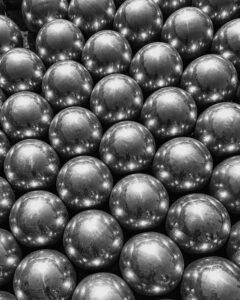
Modern manufacturing and processing environments operate under relentless production schedules where equipment reliability directly dictates operational profitability. Across heavy processing, automation, and continuous assembly lines, rotating machinery forms the physical backbone of global industrial operations. When production lines run around the clock, mechanical components endure extreme mechanical loads, persistent friction, and thermal stress. Among these critical elements, bearings serve as the foundational interface that facilitates motion while carrying radial and axial loads. Understanding the engineering, precision manufacturing standards, and material properties that govern these components is essential for plant managers, reliability engineers, and technical procurement teams seeking to eliminate catastrophic downtime.
Mechanical friction within traditional machinery represents one of the largest sources of parasitic energy loss and component degradation.
When rolling elements inside an assembly experience elevated resistance, the generated heat accelerates the breakdown of surrounding lubrication, leading to metal-on-metal contact, surface fatigue, and early structural failure. Beyond immediate component replacement costs, the broader economic consequences of an unexpected mechanical outage encompass halted production cycles, delayed shipments, idle labor, and potential collateral damage to drive shafts and housings. Consequently, industrial facilities are increasingly moving away from reactive replacement models in favor of high-performance components designed to extend mean time between failures.
Precision Engineering and Advanced Materials in Modern Motion Control
Traditional steel bearings have served industrial machinery for over a century, yet their performance parameters face severe physical limitations when pushed to modern operating thresholds. High rotational velocities, electrical currents, and demanding environmental conditions readily compromise conventional steel balls, inducing micro-welding, surface pitting, and dimensional instability. To solve these engineering hurdles, leading manufacturing facilities increasingly rely on a specialized bearing manufacturer capable of engineering hybrid solutions that integrate silicon nitride rolling elements with high-grade steel rings.
Silicon nitride materials possess mechanical characteristics that fundamentally outperform standard bearing steel under severe operating conditions.
Ceramic rolling elements exhibit significantly lower density than steel counterparts, which translates directly to reduced centrifugal forces and lower kinetic friction at elevated speeds. This reduction in internal mass allows machinery to operate at higher revolutions per minute without generating the excessive heat signatures that degrade lubricants. Furthermore, ceramic materials possess an exceptionally high modulus of elasticity, resulting in negligible mechanical deflection under load and providing the dimensional stability required for high-precision machining, robotics, and aerospace assemblies.
Lubrication Dynamics and Electrical Insulation in Industrial Applications
One of the most persistent threats to bearing integrity in modern automated facilities stems from stray electrical currents generated by variable frequency drives. When electrical charges build up on a motor shaft, they seek the path of least resistance to ground, which frequently passes directly through the rolling elements of the motor bearings. In all-steel assemblies, this current discharge creates electrical arcing across the thin lubricant film, generating microscopic craters known as fluting or electrical pitting. Over time, this erosion causes severe mechanical vibration, noise, and total bearing seizure.
Because silicon nitride acts as an exceptional electrical insulator with high dielectric strength, ceramic hybrid components eliminate the risk of electrical current damage entirely.
Stray currents cannot bridge the ceramic rolling elements, thereby protecting the steel raceways and preserving the integrity of the lubricating grease. This electrical resistance provides immense operational security in electric motors, wind turbines, and variable-speed fan assemblies. Furthermore, the non-porous, smooth surface finish of ceramic rolling elements prevents the adhesive wear and micro-welding that commonly occur between matching steel surfaces when lubrication films thin out under boundary friction conditions.
Total Cost of Ownership and Long-Term Reliability Strategies
Evaluating industrial components strictly through the lens of initial procurement cost frequently leads to inflated lifetime expenditures. Standard commercial bearings may offer a lower upfront purchase price, but their frequent maintenance cycles, requirement for continuous relubrication, and vulnerability to premature failure impose substantial operational burdens. A comprehensive total cost of ownership model factors in technician labor hours, lubricant consumption, disposal costs, and, most importantly, the financial impact of unplanned facility downtime.
High-performance hybrid bearings offer extended operating lifetimes that can exceed standard steel equivalents by several multiples depending on the application environment.
By drastically reducing internal friction and operating temperatures, these advanced components preserve lubricant integrity over extended intervals, enabling facilities to lengthen scheduled maintenance windows. In hard-to-reach locations such as offshore platforms, high-temperature kilns, and overhead conveyor systems, minimizing manual intervention directly enhances workplace safety and reduces labor overhead. Selecting components engineered to withstand extreme rotational speeds, stray currents, and hostile operating conditions forms the cornerstone of a proactive maintenance strategy designed to maximize overall equipment effectiveness and protect industrial productivity.